
Starting a Harris County Resident Search
Match the first search to the fact already known. A current address or property question belongs in the Harris Central Appraisal District record. A deed, lien, subdivision, or past transfer belongs with the County Clerk. A name plus county, date of birth, and ZIP can confirm voter status through the Texas portal when the record is not protected. Court cases are divided among the District Clerk, County Clerk, Justice of the Peace courts, municipal courts, and federal PACER, so the court type matters. For an older Houston household, city directories, newspapers, maps, and archives can give the stronger lead. None of these sources is a complete list of everyone at an address.
Keep the date with every result. An owner label, voter record, court party, and directory entry each describe a different relationship at a particular time. Compare names, middle initials, spouse or business clues, legal descriptions, and dates before treating two hits as one person. Protected voter addresses, sealed cases, current vital records, DMV data, utility accounts, and many household relationships stay outside public search results.
- Search HCAD Quick Search by address or owner and save the account number, situs address, and legal description.
- Use Harris County GIS to confirm the parcel and the city, ZIP, precinct, and subdivision layers around it.
- Check the County Clerk real-property index for the recorded document behind an apparent owner change.
- For a living voter, use the official Texas lookup with the required identifying fields and respect suppressed or protected records.
- When an online path ends, ask the custodian, library, archive, or public-information officer for the specific record rather than filling a gap with an assumption.
Note: A no-result can reflect a spelling variant, different court, protected file, recent recording delay, or an older record that needs staff assistance.
Harris County Records Offices
Harris County does not keep one master resident roll. The County Clerk records deeds, plats, marriage licenses, probate files, assumed names, and other county collections. HCAD maintains appraisal accounts tied to an owner label, mailing address, situs address, and parcel details. Elections offices manage voter registration records under Texas disclosure rules. The District Clerk and other court custodians keep cases in separate systems. For an address-led question, the Harris County street directory route gives the full parcel-to-deed sequence without turning an appraisal account into proof of title or occupancy.
Harris County Clerk, Real Property
201 Caroline, Suite 320
Houston, TX 77002
713-274-8680
Harris Central Appraisal District
13013 Northwest Freeway
Houston, TX 77040
713-957-7800
Harris County Property Roll Clues
HCAD is the best first stop when a person is connected to a parcel. Its Quick Search offers account, address, owner-name, and range-address modes, while Advanced Search adds legal description, ZIP, key map, map facet, school district, state category, and building style. The detail card can show an account number, owner and mailing address, property or situs address, legal description, value, exemptions, jurisdiction, improvement details, and selected history. Data normally refreshes nightly. It is an appraisal record, however, and HCAD states that it is not an abstract company and cannot decide title priority.
The HCAD Quick Search screen shows the main starting choices. A mailing address can point to an agent, business, or post office box, while the situs address identifies the parcel itself. A homestead exemption shows that an exemption was claimed for an account. It does not settle who is in a household on a given day.
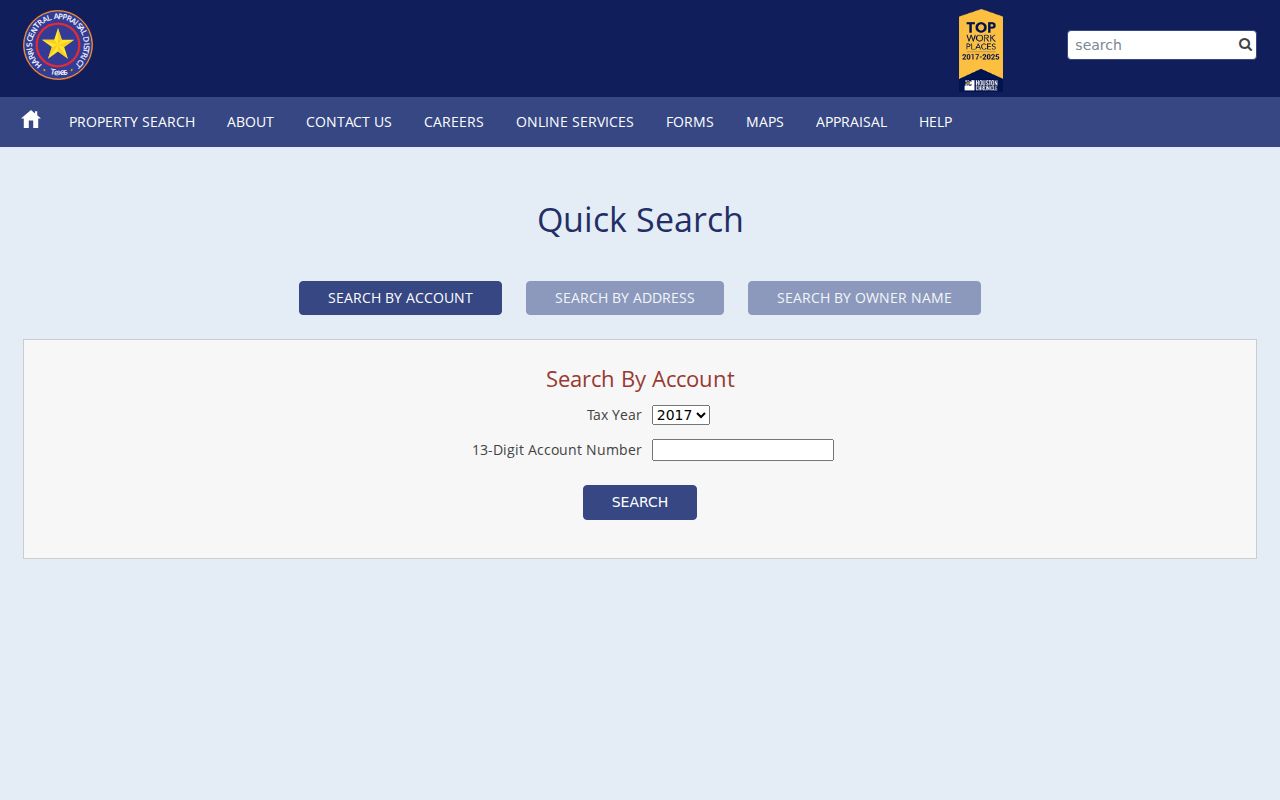
Save the account and legal-description details from this search before moving to a recorded deed or map layer.
| HCAD field | Search use | Format note |
|---|---|---|
| Street number and name | Find a known property | Omit street-type words and periods |
| Owner name | Find an appraisal account | Last name plus first initial or name, no comma |
| Street range | Review a block segment | Enter beginning and ending numbers |
| ZIP code | Narrow advanced property results | Five digits, property accounts only |
| Legal description | Bridge property and deed records | Partial beginning letters return variations |
Harris County Deed Index Trails
The County Clerk real-property index turns an HCAD owner lead into recorded evidence. Search grantor, grantee, trustee, date range, subdivision or description, instrument type, and lot, block, unit, abstract, tract, volume, or page fields. Grantor means the party conveying an interest; grantee is the party receiving it. The legal description matters because a street address can change or repeat, while a subdivision and lot or abstract can hold the parcel together. New recordings may take one to two business days to appear.
The County Clerk deed-index page is useful for a parcel-specific chain. Images are available from November 1, 1960. The portal warns that it is not the official repository and may reflect statutory redactions. Newer watermarked images can be available online, while non-certified or certified orders may require an account and payment. An in-person visit, copy order, mail, fax, or email request remains the route for an unavailable image, older material, or a raised seal.
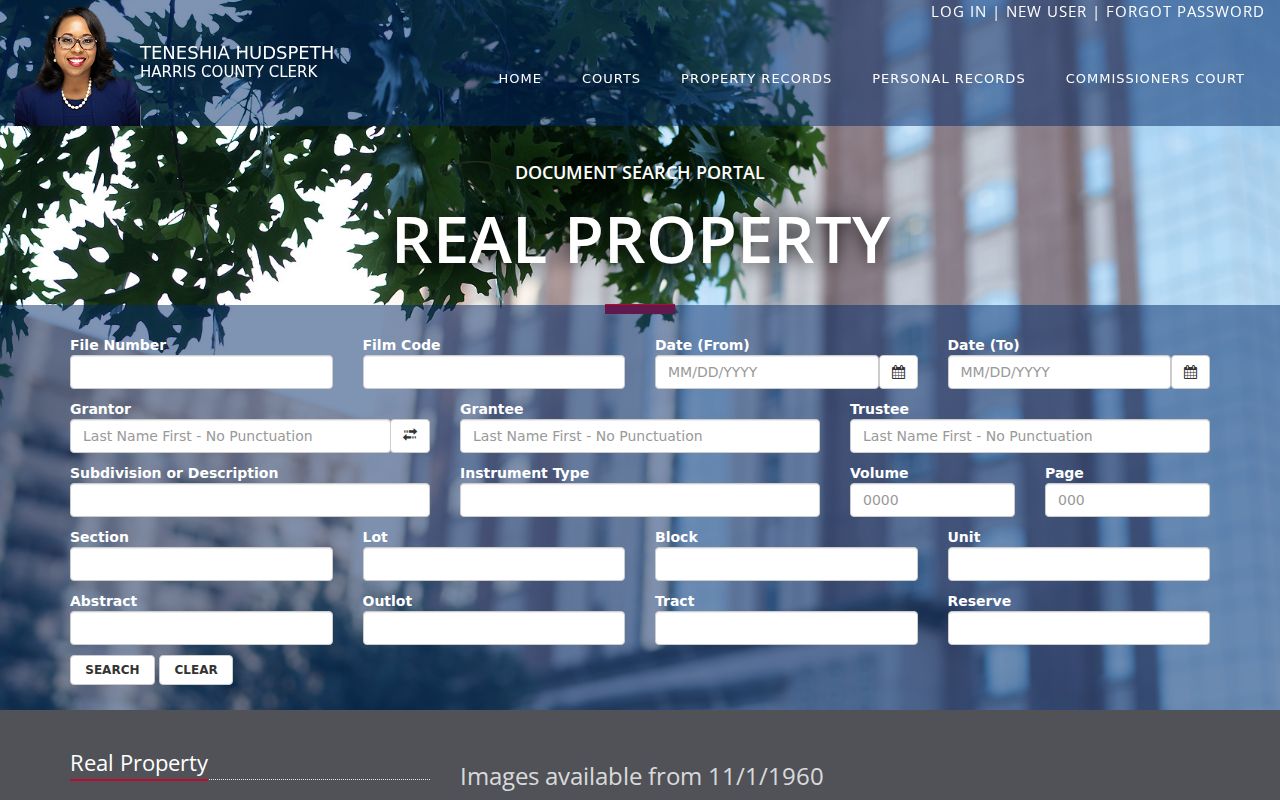
Use the instrument number, recording date, and legal description from a result to test each link in a deed chain.
- Parcel
- A defined piece of land represented by an appraisal account and map boundary.
- Index
- A finding tool that points to a record. It is not always the complete document image.
- Legal description
- The lot, block, subdivision, abstract, or other land description used in recorded instruments.
- Criss-cross directory
- A historical directory section arranged by address rather than by surname, when a volume includes one.
Harris County Voter Record Limits
Texas My Voter Portal uses first name, last name, county, date of birth, and ZIP in its name mode, with VUID and Texas driver-license alternatives. The record can confirm registration status, county, precinct or district context, and polling information when public. It does not disclose ballot choices. A miss can mean the wrong county, ZIP, date of birth, spelling, a suspense or cancellation status, a protected record, or a maintenance issue. Call the registrar rather than treating a non-match as proof that someone never lived in Harris County.
The official Texas My Voter Portal is an individual confirmation tool, not an open address-by-address roll. Texas Election Code rules protect identifiers, telephone numbers, website birth dates, and specified residence addresses. A full registered-voter list follows a different statutory request process and can still require redactions, affidavits, fees, and an identified intended use.
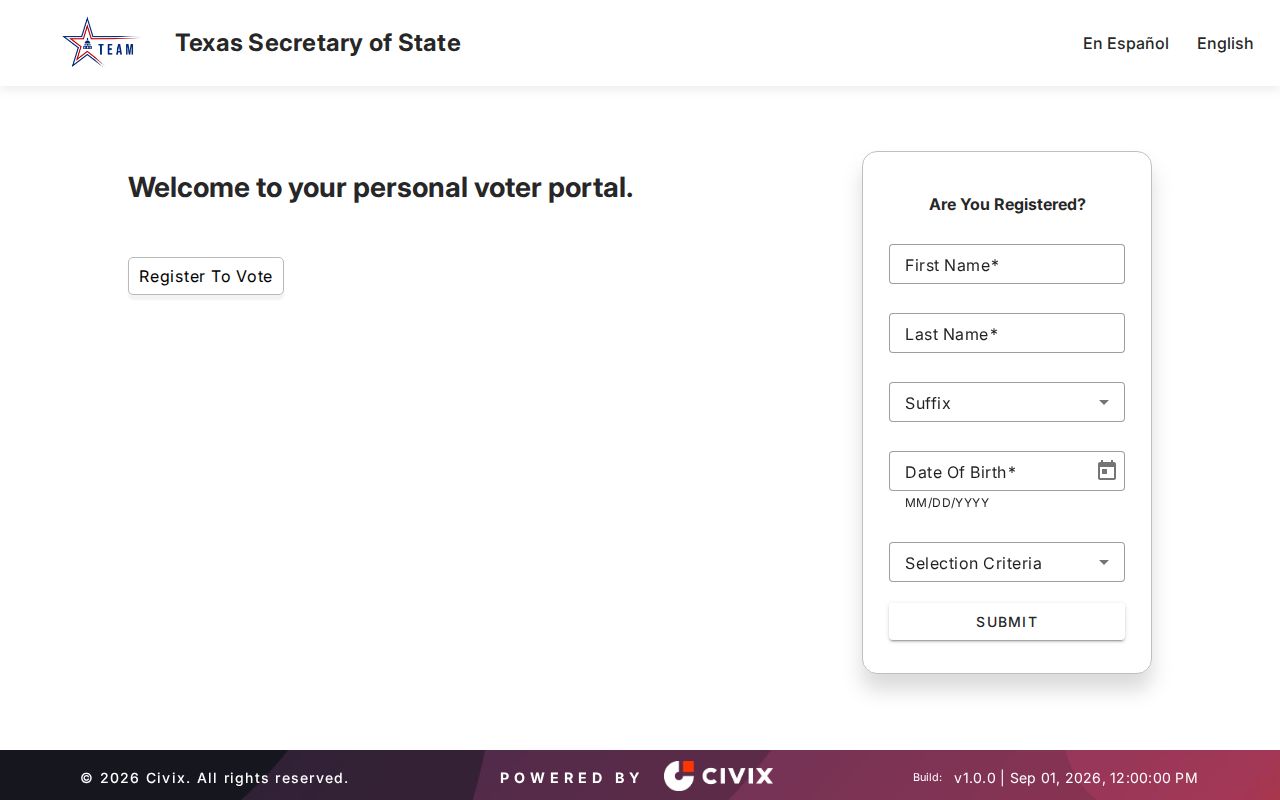
The form’s required fields show why a name alone is rarely enough to confirm the right Harris County voter.
Current Harris County Resident Sources
Current directory-like records have different coverage. HCAD names an owner of record or mailing contact for a parcel, not every person present there. The County Clerk index names parties to recorded instruments. My Voter Portal confirms a qualified voter record but does not provide a household roster. Courts identify parties to public cases, while probate can connect an estate, executor, or heir to a filing. Business, assumed-name, and license databases identify a business or credential relationship, not a current home address. Choose the source that answers the precise question and check its date.
| Source | Who It Lists | Keeper | Access |
|---|---|---|---|
| HCAD appraisal roll | Parcel owner label and property details | Harris Central Appraisal District | Free public search |
| Voter status lookup | Individual registered voter information | Texas SOS and Harris Votes | Individual fields; protected data withheld |
| Recorded instruments | Grantors, grantees, trustees, and legal descriptions | Harris County Clerk | Public index; image and copy routes vary |
| Public court indexes | Named parties and case status | District, County, and JP clerks | Portal or counter, limits vary |
| Super Neighborhood profiles | Community organizations and public contacts | City of Houston | Public profile, not a member roll |
For a one-name question, the Harris County resident lookup workflow separates court, voter, property, vital, and probate channels so a record is not asked to prove more than it can. For a block, use parcel geometry first. For an earlier household, use the library collections and date each clue.
Harris County Court Record Routes
A court name search must start with the right custodian. The Harris County District Clerk public search covers district courts and county criminal courts at law, with party inquiry, case or cause number, party role, filed-date range, status, and court-type fields. County civil and probate records use County Clerk routes. Justice of the Peace cases have their own Find My Case search. Houston municipal Class C matters are separate, and federal cases for the Houston division use PACER. A party hit is not proof that the person is the same individual, and public case information can omit sealed, juvenile, adoption, confidential family, and protected-victim material.
The District Clerk public search requires registration or login for public case information. Older material may need a cause number, style, or date range and can involve a clerk, counter, public terminal, or historical-search request. A document or docket must be read for its actual disposition. The county’s online services index helps route records that sit outside a single portal.
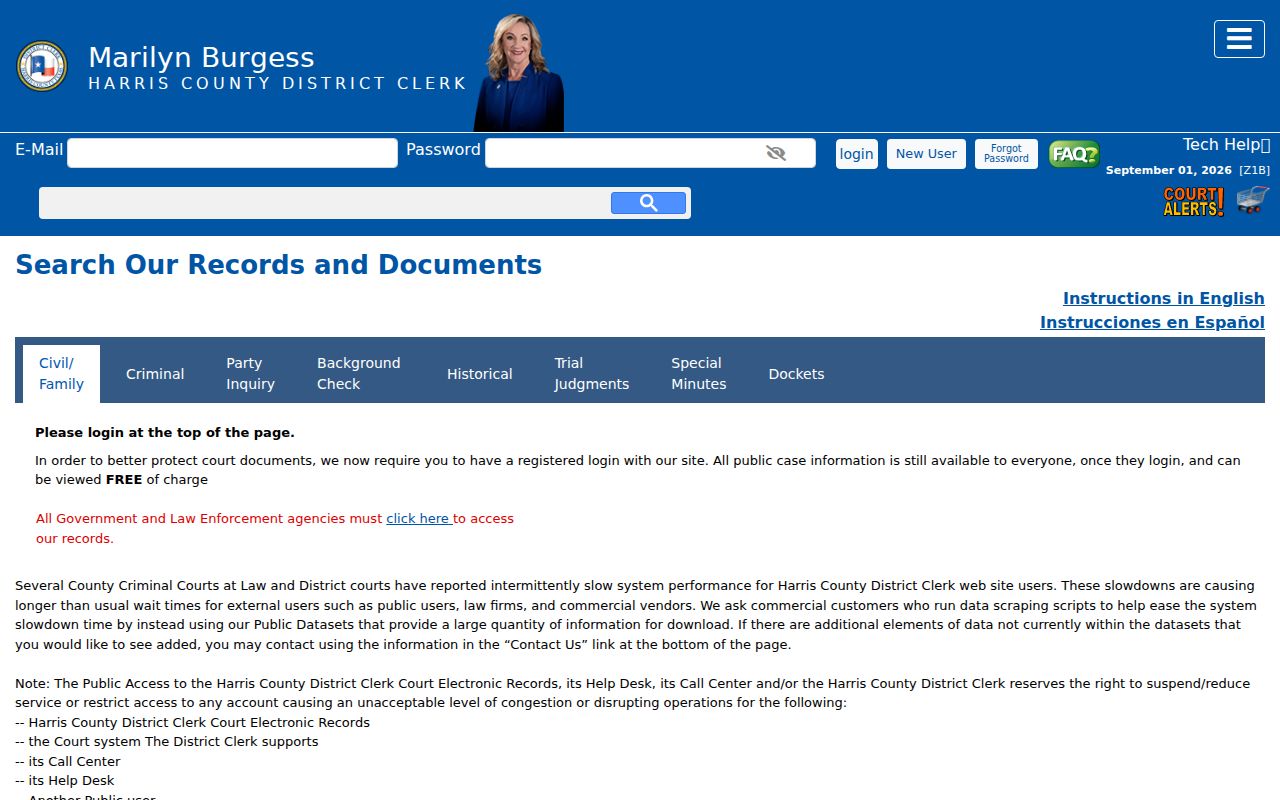
The party and case options shown here make a filed-date range and case type useful safeguards against same-name matches.
Use the Harris County online-services list when a record type points to another county office. It includes routes for case, tax, voter, jail, marriage, probate, assumed-name, and UCC information rather than implying that one search screen reaches them all.
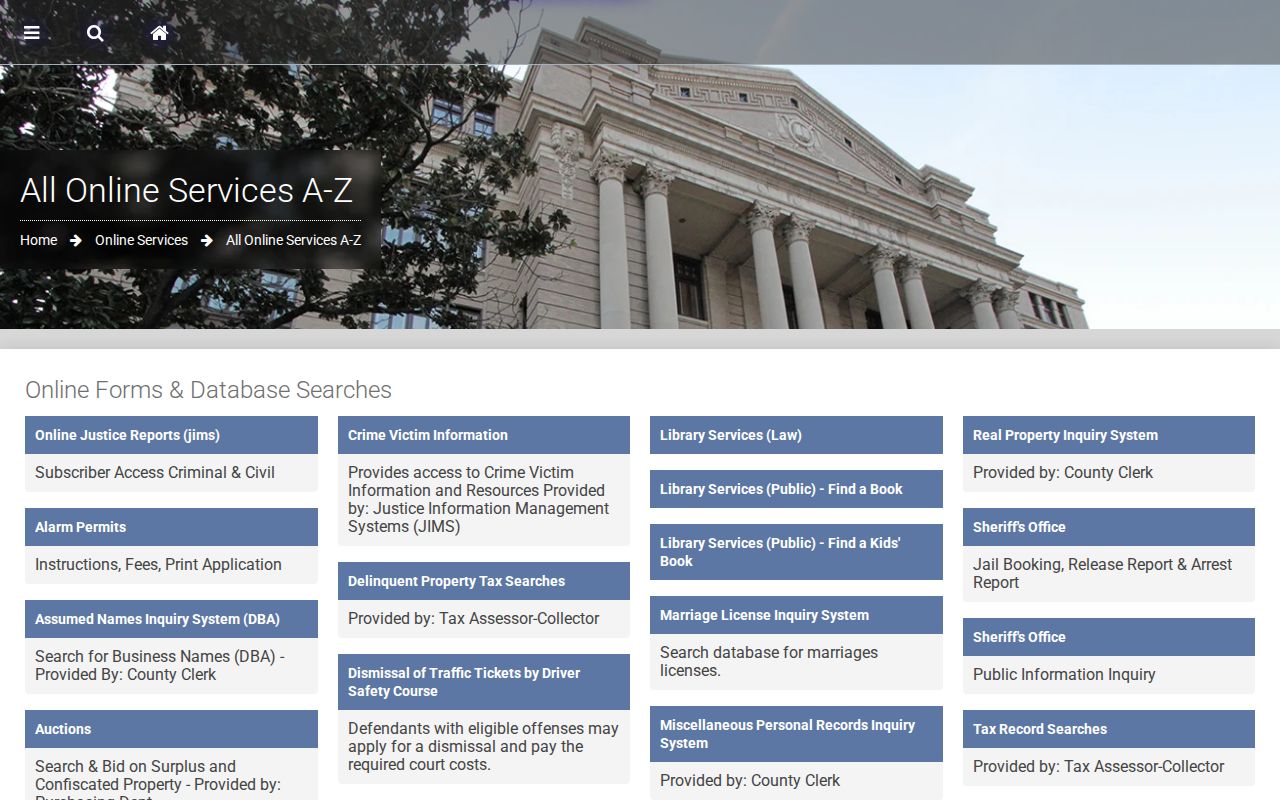
This A to Z directory is a useful routing check when an office changes a portal or a record belongs to a different clerk.
Harris County Vital Record Boundaries
Texas separates a public index, a verification letter, and a certified vital record. Birth records become public after 75 years and death records after 25 years under Texas Government Code §552.115. Current certificates remain limited to qualified people and may require identity, relationship, or tangible-interest documentation. The Department of State Health Services offers marriage verification from 1966 and divorce verification from 1968, but those letters are not the local marriage license or divorce decree. For a Harris County event, the issuing County Clerk or District Clerk is the source for the actual local document.
DSHS uses specific forms for birth, death, marriage or divorce verification, correction, and adoption matters. An eligible applicant can use online, mail, or walk-in routes; mailed vital applications require a notarized signature and acceptable ID copy. Historical research can instead move through county registers, newspapers, cemetery and funeral materials, church records, and archive collections. The official adoption registry and confidential-intermediary procedures, not a public people search, are the Texas path for adoption connections.
Note: An incomplete vital-record application is closed, so review the required identity, payment, relationship, and supporting-document fields before sending it.
Harris County Business Record Checks
An assumed-name filing, Texas entity record, or professional license can confirm a business relationship, filing address, or credential. It should not be used as a shortcut to infer someone’s current residence. The County Clerk assumed-name collection accepts owner, business, file, film, and date searches. SOSDirect adds entity, filing-number, registered-agent, officer, manager, and filing-history routes. Texas licensing boards publish credential status within the limits of their own systems. These records are most useful when a dated business name helps distinguish otherwise similar people.
The Texas Department of Licensing and Regulation search supports individual, establishment, and school searches with a license-type selection. A license can show status, number, dates, or published discipline information. It cannot prove where the credential holder lives. SOSDirect permits temporary login; its fee and copy rules are separate from the County Clerk’s record-copy process.
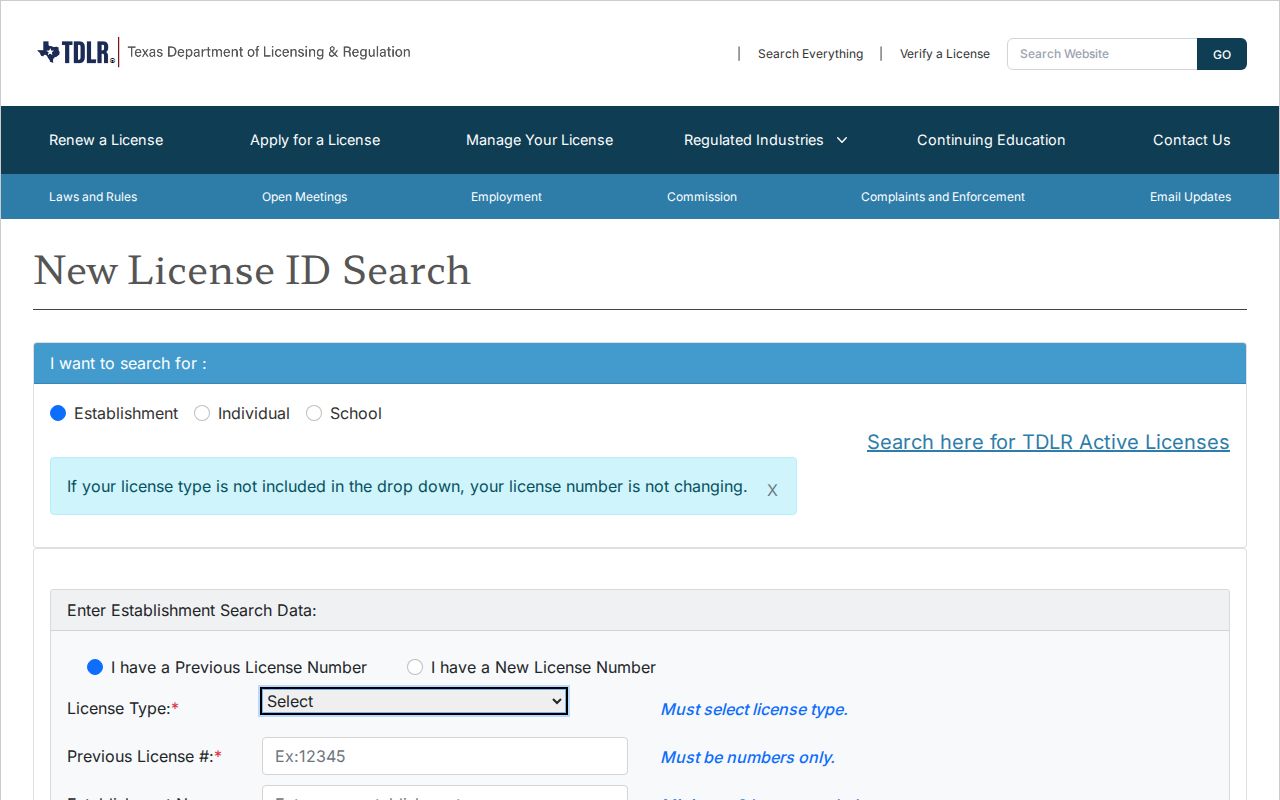
Selecting the correct license category before searching helps separate a credential record from a residence or ownership record.
Harris County ZIP Labels and Jurisdiction
A Houston postal label is not proof that an address lies inside Houston city limits. Harris County includes incorporated cities, municipal villages, unincorporated areas, and postal communities. Bellaire, Memorial-area villages, Kingwood, Cypress, Katy, Pasadena, Baytown, and Humble can all create a mismatch between postal city, ZIP boundary, and government jurisdiction. The county GIS map has city-limit, precinct, school-district, subdivision, flood, MUD, and annexation layers that put a parcel in context. USPS ZIP lookup is the delivery check; it does not decide which office holds a city permit or court file.
HCAD Advanced Search accepts a five-digit ZIP, but it returns property accounts rather than residents. Start with the exact address, check its parcel and municipal layer in GIS, then use the appropriate county or city keeper. The Harris County ZIP code directory explains the county’s postal geography and the special care needed at municipal borders.
Historical Harris County Directories
Houston’s directory trail is unusually deep. Houston Public Library lists digitized city directories from 1866 through 1924, partial 1925 through 1959 coverage through HeritageQuest, and physical Houston directories through 1986. The Houston Metropolitan Research Center also reports Yellow Pages through 2005. A volume can put a surname, occupation, spouse notation, address, business, or telephone clue in a specific year. Its omissions matter too: a historical directory is not a census, and it may not list every renter, child, boarder, or rural household.
Clayton Library and Houston Public Library genealogy resources combine directories with newspapers, death records, funeral collections, maps, and staff guidance. The Portal to Texas History offers indexed city-directory items with full-text, metadata, name, decade, and partner browsing. When an exact year is not online, HMRC and Clayton provide the local shelf and research-request route. The Harris County city directory collection details the year runs, entry format, and address-first research method.

These local-history resources make a directory entry more useful when it is checked against a newspaper, map, census, or probate record from the same period.
Harris County Archives Beyond the Portal
Online images are not the same as a complete name index. The County Clerk archive plan describes 72,000 microfilm rolls and more than 200 million images, with all pre-1961 record books scanned but the older 1836 through 1955 index still a work in progress. That gap changes the best method for an early deed or name. Capture the legal description and the details already found, then ask the County Clerk Records Center or archive staff about a manual book, film, or image search. Harris County Archives preserves records from more than 70 originating offices as well as private manuscripts, and research is by appointment.
The Harris County Archives is a practical endpoint for historical government material. Its contact route is archives@hctx.net and 713-274-9680. The Todd Street warehouse described in the archive plan provides a real fallback when a pre-digital record does not surface online. The County Clerk’s 2025 preservation work also indexed more than 400 historic marriage licenses dating to 1865, including records of Free Men of Color and Free Women of Color, making it an important local genealogy lead.
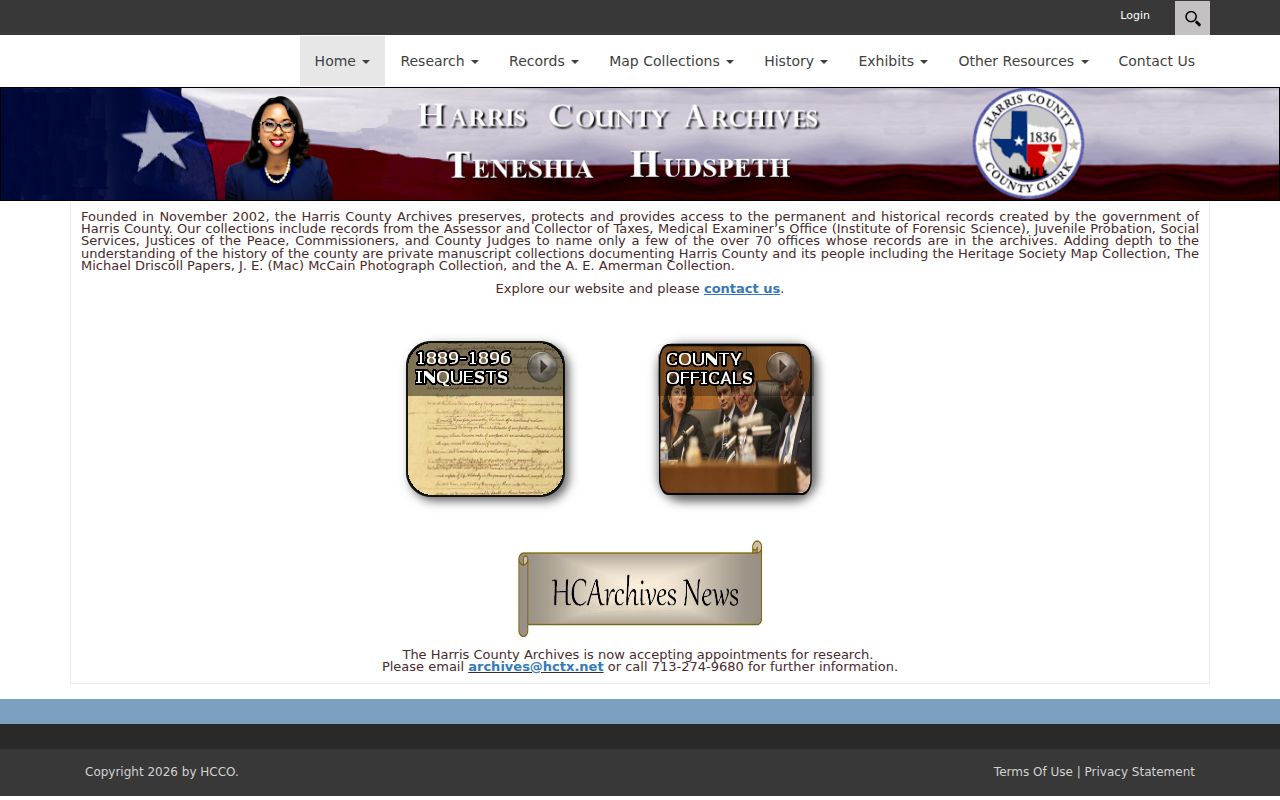
An appointment, a clear date range, and a legal description or record reference give archive staff a better starting point than a broad name-only request.