
Harris County Previous Residents by Era
Start the Harris County previous residents trail with the source that fits the period. A recorded deed establishes a property transfer, an address directory supplies a dated listing where its volume supports it, and a census supplies an older household snapshot. HCAD is a useful current parcel lead, but its owner history is not title proof. For a house history question, write down the current situs address, account number, legal description, lot or block, and map parcel before searching backward.
| Source | Years It Covers | Where Held | What It Shows |
|---|---|---|---|
| County Clerk online real-property index and images | Images from November 1, 1960; new records can take one to two business days to appear | Harris County Clerk portal | Recorded deeds, liens, restrictions, plats, and legal descriptions |
| Pre-1961 deed books, microfilm, and scanned TIFFs | County books back to 1836 are described; electronic indexing remains incomplete | County Clerk Records Center, public terminals, or Harris County Archives appointment | Earlier deed-book and grantor-grantee research using legal descriptions |
| HCAD ownership history | Current and selected tax years; the oldest view varies by account | Harris Central Appraisal District | Owner and account lead, value, mailing and situs fields |
| Houston directories | Online 1866-1924; partial 1925-1959; physical run through 1986 | HPL Digital Archives, HMRC, Clayton, and HeritageQuest | Dated address, name, phone, or business clues where the volume supports them |
| Federal census | 1870-1950 are currently open under the 72-year rule | NARA, Census, FamilySearch, and library databases | Household composition, age, relationship, and enumeration geography |
| Sanborn maps | Issue and sheet coverage vary by address | Library of Congress, HPL, or TexShare | Building footprint, use, and nearby structure context, not a named occupant |
Older sources need more care. A directory line can omit people, a census date may not match a move date, and a map can date a structure without naming an owner. Use the most recent deed first when the goal is a title chain, then add directory, map, and census evidence around the specific years at issue.
Freeze the Harris County Address
Before looking for past residents, stabilize the location. Search the address in HCAD Quick Search and retain the 13-digit account number, current legal description, situs address, owner label, and map link. Then open the Harris County GIS map to inspect the parcel outline, street label, subdivision, and lot or block. A legal description is especially useful when a road name repeats or an address has changed over time.
Do not substitute the mailing address for the situs address. The mailing line can point to a different place, an agent, a business, or a post-office box. HCAD states that it is not an abstract company and does not resolve title priority. Its current account provides the starting coordinates for research, while a County Clerk deed provides the recorded transfer evidence.
Read the Harris County Current Deed
Use the account's legal description to find the latest recorded transfer in the Harris County Clerk real-property index. The portal searches grantor, grantee, date range, file number, instrument type, subdivision or description, volume, page, lot, block, abstract, tract, and related legal fields. Read the image when it is available. The index alone identifies the record; the document is where the transfer language, legal description, restrictions, signatures, and recitals are found.
Real-property images are available from November 1, 1960 under the portal's stated notice. Newer post-January-2000 images may have a free watermarked route, while non-certified copies without a watermark can require an account and purchase. An online certified copy may not have a raised seal. If a document cannot be found online or a raised seal is required, use the Clerk's office or copy-order route.
The County Clerk public-records page shows the Harris County previous residents copy-request routes and explains the distinction between online material and older microfilm or copy needs.
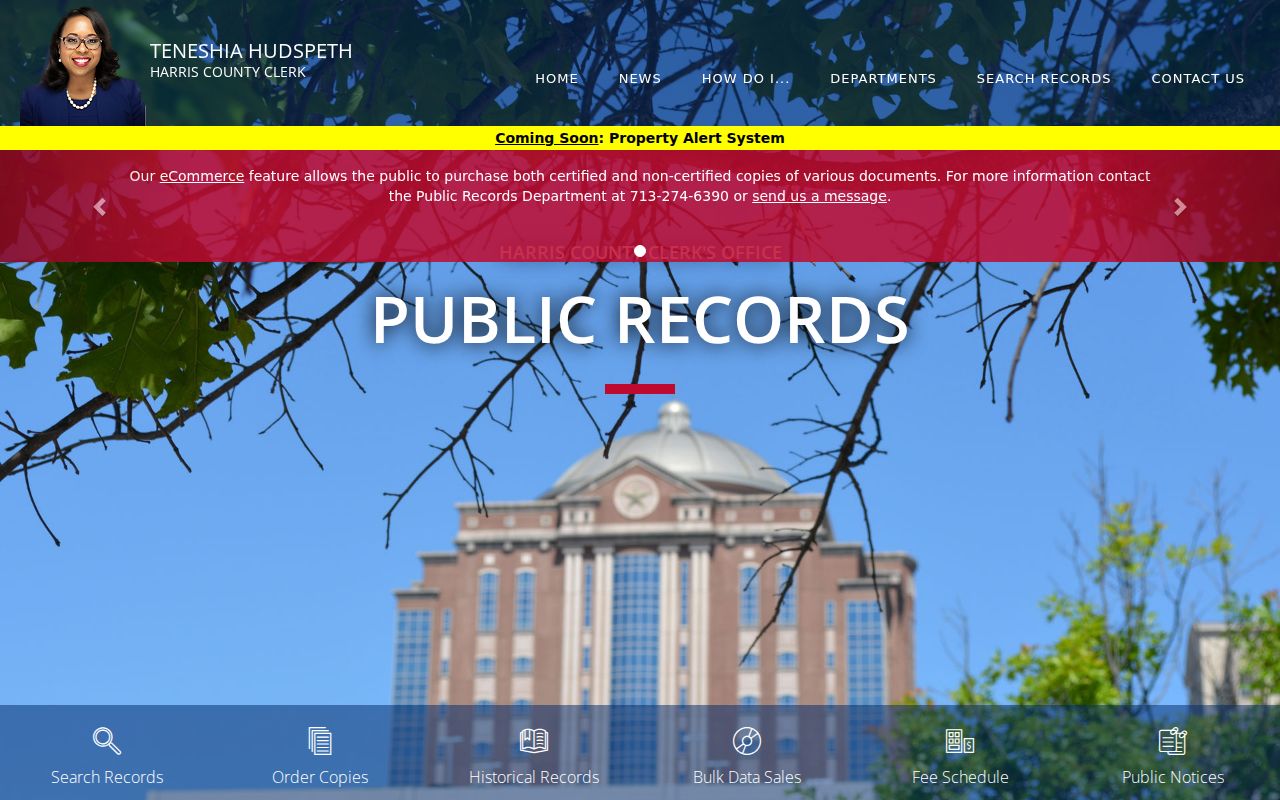
That fallback matters for old instruments: preserve the legal description and known book, page, or file details before sending a request.
Trace Harris County Previous Residents Through Deeds
A backward deed chain follows the transaction, not the street name. Begin with the current owner as grantee in the deed result and identify the seller. Search that seller as grantee to locate the earlier purchase, compare the legal description, and repeat. Names can change form in the index, so test punctuation-free variants as well as spouse, trustee, executor, estate, and company forms when the record itself calls for them.
- Capture the HCAD account, legal description, situs address, and current owner label for the target parcel.
- Find the current owner's purchase in the County Clerk index and record the instrument or file number, recording date, grantor, grantee, volume or page, and legal description.
- Search the seller from that document as a grantee. This finds the earlier acquisition rather than assuming an address-only result is the same land.
- Compare the legal description at every link. Stop and investigate if lot, block, subdivision, abstract, or tract changes.
- When the online path ends, take the legal description to the Clerk's public terminal, copy-order channel, Records Center, Archives appointment, or a written Texas Public Information Act request to the correct custodian.
- Grantor
- The party transferring an interest in the recorded document, commonly the seller in a deed.
- Grantee
- The party receiving an interest in the recorded document, commonly the buyer in a deed.
- Chain of title
- The sequence of recorded transfers for the same property, checked link by link against its legal description.
- Legal description
- The subdivision, lot, block, abstract, tract, or related land description used in recorded documents. It is more stable than a street label for older research.
Note: An address match can be wrong when subdivisions repeat street names; a legal-description match is the stronger test when tracing a parcel backward.
Where Harris County Deed Images Stop
The online boundary is an important part of an honest Harris County previous residents search. The Clerk's real-property page says images are available from November 1, 1960. The FY2026 archive plan reports that pre-1961 record books were scanned to grayscale TIFF, but electronic indexing for 1836 through 1955 remains a need or later phase. Scanned books do not automatically provide a complete searchable name index.
The County Clerk integrated-records system project item documents the Harris County effort to improve land, personal, and vital-record systems. It does not establish that every historic book is already searchable, so confirm the current portal state before relying on a new feature.
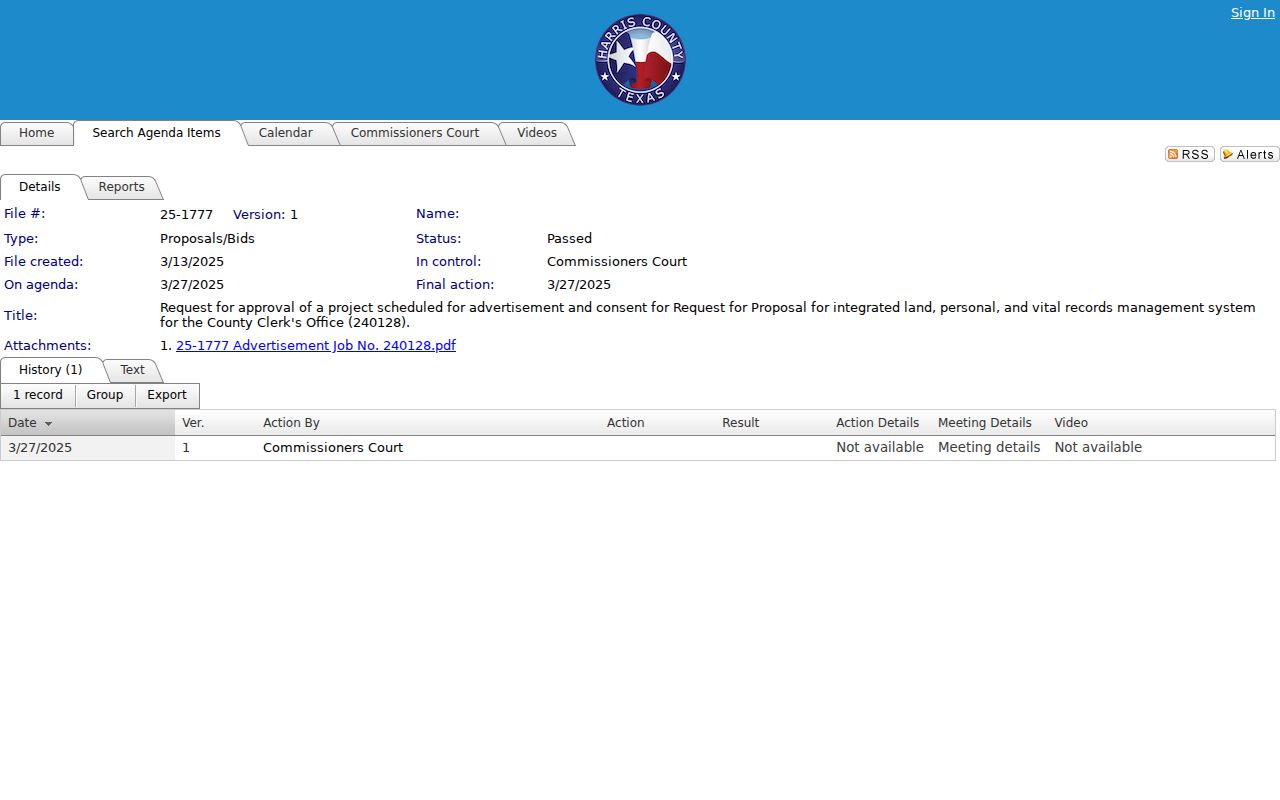
For an older chain, the correct fallback is a manual book or film search using the legal description, not a guess based only on a familiar address.
Pair Harris County Directories and Census
Deeds identify a property trail, but they may not identify everyone who lived there before. Pair an address directory with a census near the same period. Houston directories are digitized from 1866 through 1924, have partial HeritageQuest coverage from 1925 through 1959, and continue in a physical run through 1986. Use the exact directory year and, where present, its reverse or criss-cross section. The collection itself is described in the Harris County city directory resources.
A useful pairing sequence is:
- Check the directory year immediately before and after the target date, recording the address and every printed clue.
- Look in the reverse section if the volume has one. An alphabetical entry alone may not capture the address evidence needed.
- Pair the closest census year from 1870 through 1950 and compare the household, relationship, and enumeration geography with the directory date.
- Use a Sanborn sheet, map, subdivision plat, or GIS annexation layer to bridge a changed street label, historical community name, or boundary.
- Test an apparent move or death with newspapers, obituaries, funeral material, probate, or a recorded deed rather than filling a gap with an assumption.
Federal census information is a historic snapshot. Harris County's annexation and urban or rural enumeration changes make the enumeration district and map context part of a careful address comparison.
Harris County Previous Residents House Dates
Sanborn maps, permits, and plats can date the setting around a prior resident. A Sanborn sheet may show that a structure existed, its footprint, use, nearby buildings, and later additions. It does not identify a particular owner. A permit or code record can supply construction, alteration, demolition, or change-of-use dates and public case fields where the relevant custodian makes them available. The research did not locate one complete current countywide permit index, so use the municipal or county address, case, portal, 311, or public-information route that serves the parcel.
Address continuity is a separate problem. Harris County GIS includes annexation and historic-area layers, yet the official material did not establish a single countywide renumbering year. Bridge a gap with street-name variants, old maps, a Sanborn sheet index, the subdivision plat, the HCAD legal description, and the parcel geometry. That chain is stronger than trying to force an old street number into a modern search box.
Harris County Previous Residents Archive Fallback
When the web index stops, start the offline request with a precise property description. The County Clerk Real Property Department is at the Harris County Civil Courthouse, 201 Caroline, Suite 320, Houston, with office, mail, fax, email, and copy-order options documented by the Clerk. The Harris County Archives provides appointment research for historic county material and lists archives@hctx.net and 713-274-9680 as contact channels. The archive setting is a practical route for older records, not an assurance of an immediate name search.
The County Clerk news archive is a useful place to check for changing public-record access notices and historic-record updates before placing a request.

Ask for the applicable book, film, record type, date range, and legal description. That gives staff a usable route into material that is scanned but not yet fully indexed.
Harris County Previous Residents Marriage Finds
Family-history research can sometimes close a household trail after an address record ends. In 2025, the County Clerk announced preservation and indexing of more than 400 historic marriage licenses dating to 1865, including records for Free Men of Color and Free Women of Color, within a broader effort to digitize more than 1.9 million marriage licenses. The find is valuable as a historical family connection, but a marriage record does not establish that both parties lived at a particular address.
Texas DSHS marriage and divorce guidance explains that the statewide marriage index begins in 1966 and the divorce index begins in 1968. For older copies, use the issuing county or district clerk. A DSHS verification letter is not the underlying marriage license or divorce decree.
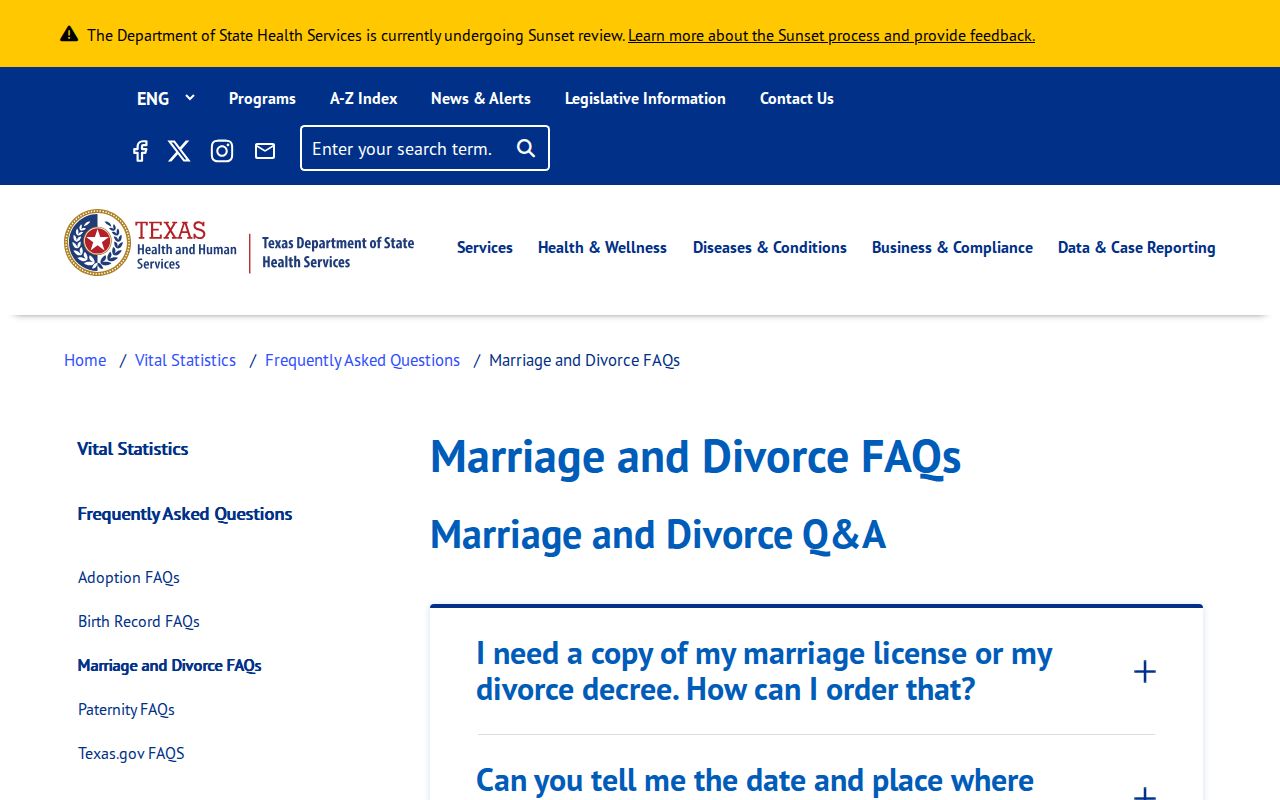
Use a marriage, obituary, funeral, or probate record to test a relationship and date, then return to the address documents for property continuity.
Harris County Previous Residents Limits
Past-resident research cannot name every person who stayed at a location. A deed shows a recorded land transfer. A directory, census, obituary, or probate file answers a dated historical question within its own scope. None of those records proves every household member, visitor, delivery account, utility customer, motor-vehicle address, protected voter address, or sealed filing. Treat a blank result as a research gap, not a reason to invent a connection.
Lawful use. Use Harris County previous-resident records for family history, house history, estate research, property verification, and personal lawful inquiry. Never use historic or current information to stalk, harass, intimidate, or harm another person.
Texas confidentiality rules can protect voter residence information and the Address Confidentiality Program provides a substitute address and mail-forwarding protection for qualifying people. Records can also be stale or incomplete. Confirm an important finding with the office that holds the original material.